Read our Blog
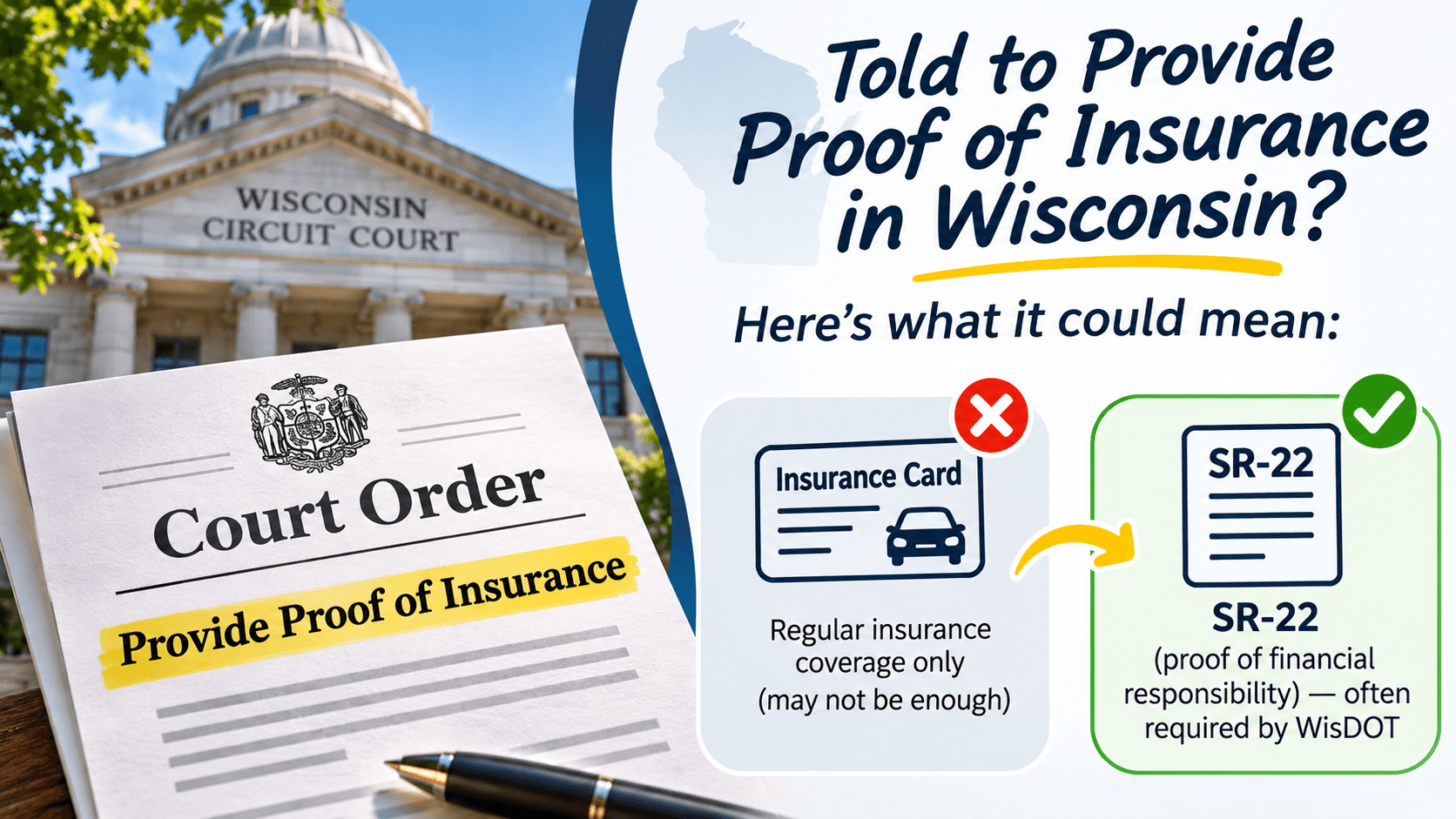
A Wisconsin Court Told Me I Need Proof of Insurance — What Does That Mean?
Quick answer: If a Wisconsin court, WisDOT, or DMV notice tells you to provide “proof of insurance” or “proof of financial responsibility,” do not assume that showing your normal insurance card is enough. In some driver-license situations, Wisconsin requires an SR-22 certificate filed with the DMV by an insurance company.
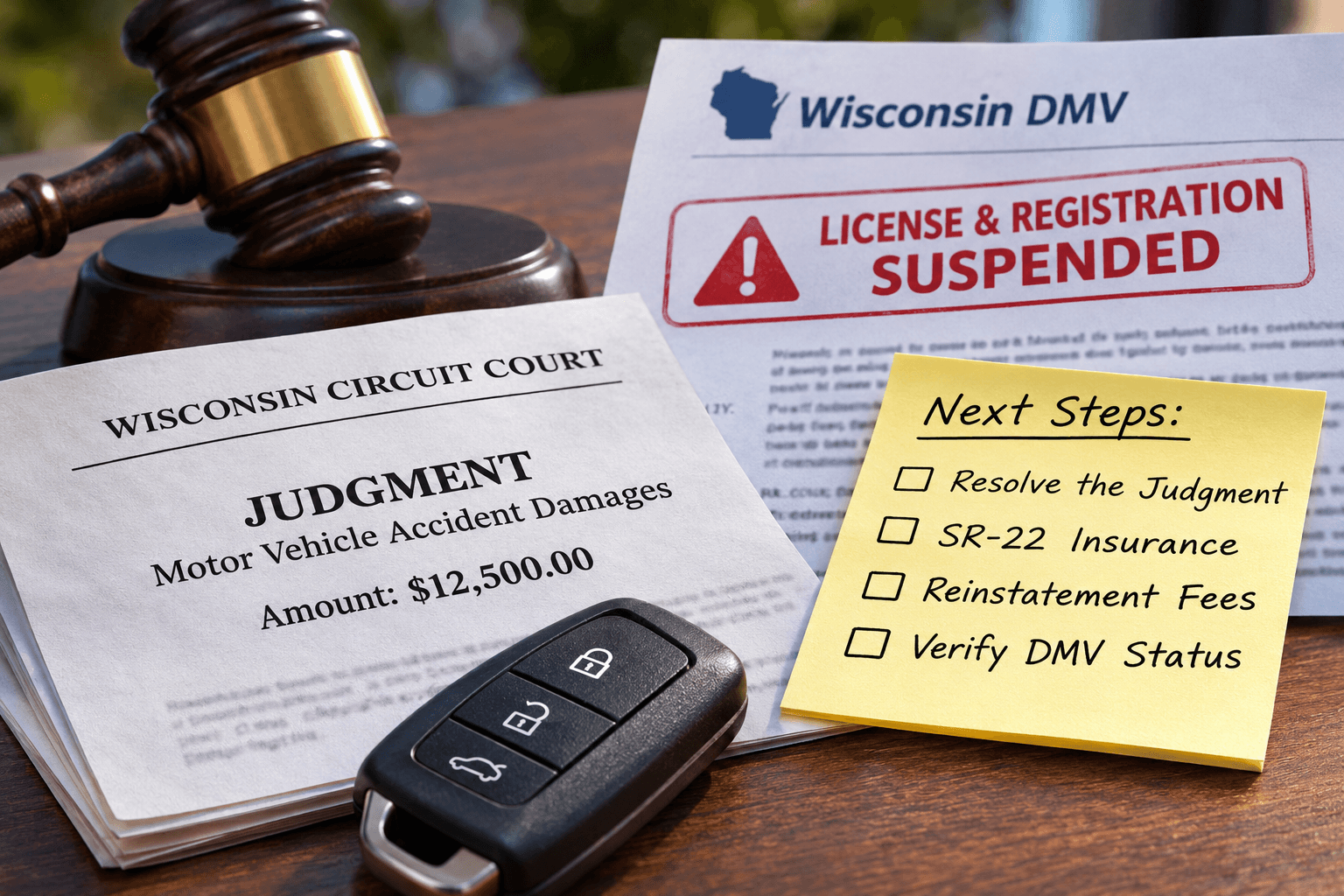
I Have an Unpaid Car Accident Judgment in Wisconsin — Can DMV Suspend My License?
Quick answer: Yes. If a Wisconsin court enters a qualifying unpaid judgment against you for damages from a motor-vehicle crash, the judgment can be certified to the Wisconsin DMV. Once DMV receives the required court documents, your driver license and vehicle registrations can be suspended. Resolving the judgment may be only one part of getting your driving privileges back because SR-22 and reinstatement requirements can also apply.
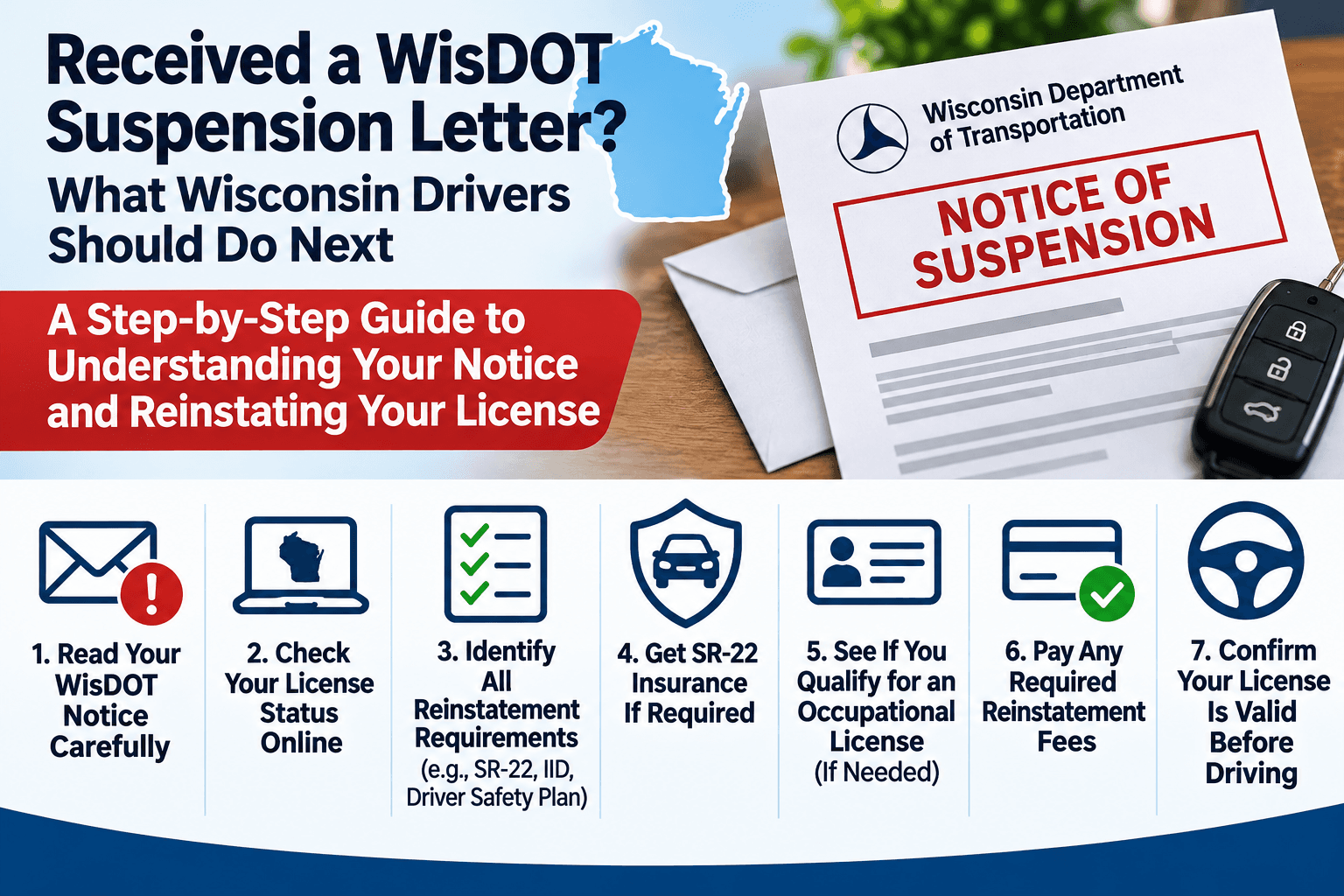
Received a WisDOT Suspension Letter? What Wisconsin Drivers Should Do Next
Quick answer: If you receive a Wisconsin Department of Transportation suspension or revocation notice, do not assume that paying a ticket or buying insurance automatically fixes the problem. First identify why your driving privilege is being withdrawn, when the action begins, how long it lasts, and what WisDOT requires before you can legally drive again. Depending on your situation, the next steps may include waiting through a suspension or revocation period, obtaining an SR-22, completing a Driver Safety Plan, installing an ignition interlock device, paying a reinstatement fee, or applying for an occupational license.
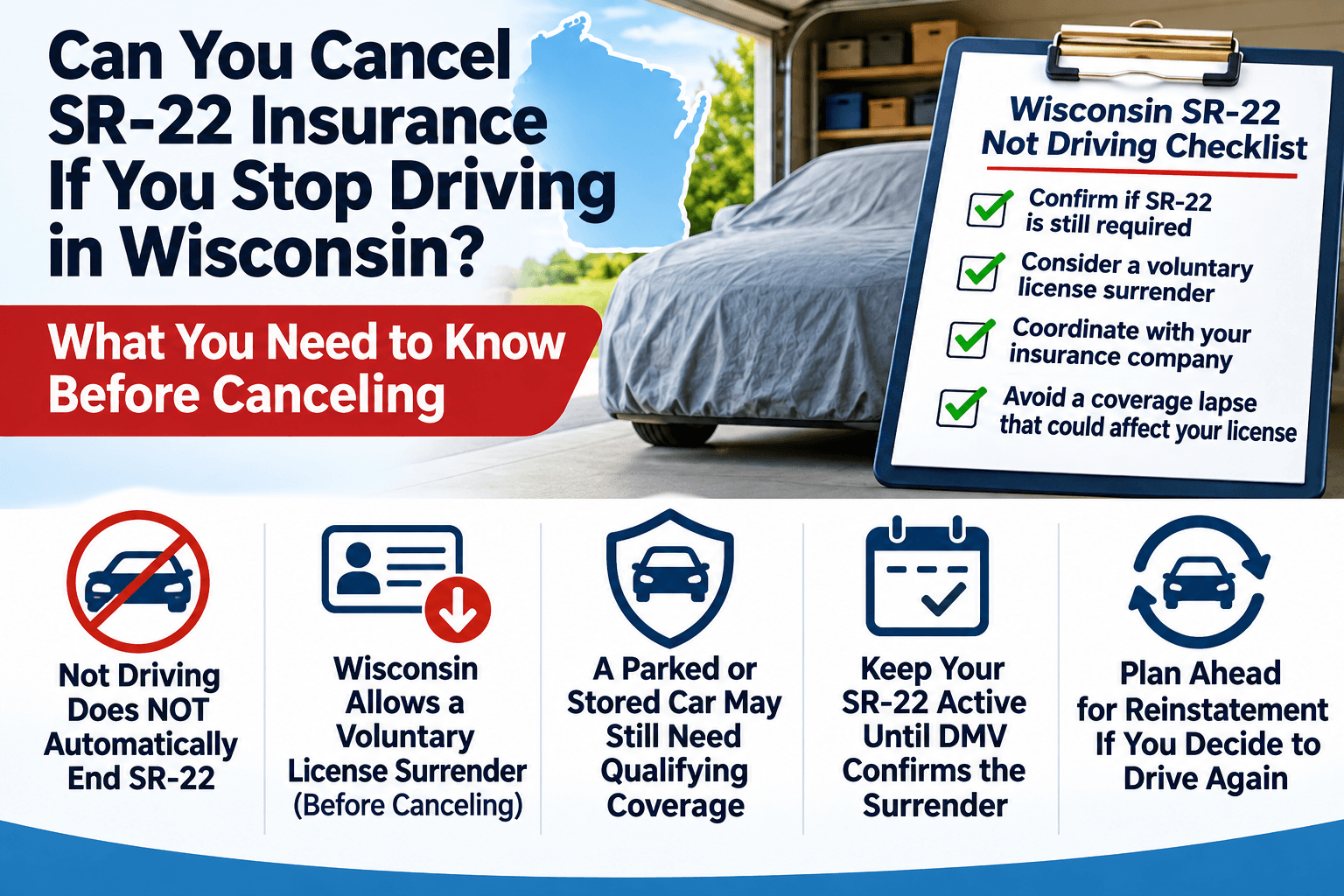
Can You Cancel SR-22 Insurance If You Stop Driving in Wisconsin?
Quick answer: Simply parking your car or deciding not to drive does not automatically end a Wisconsin SR-22 requirement. If WisDOT still requires you to maintain proof of financial responsibility, canceling the insurance can cause your filing to end and may affect your driving privilege. However, Wisconsin allows certain drivers to voluntarily surrender their driver license before canceling required SR-22 insurance if they genuinely intend to stop driving.
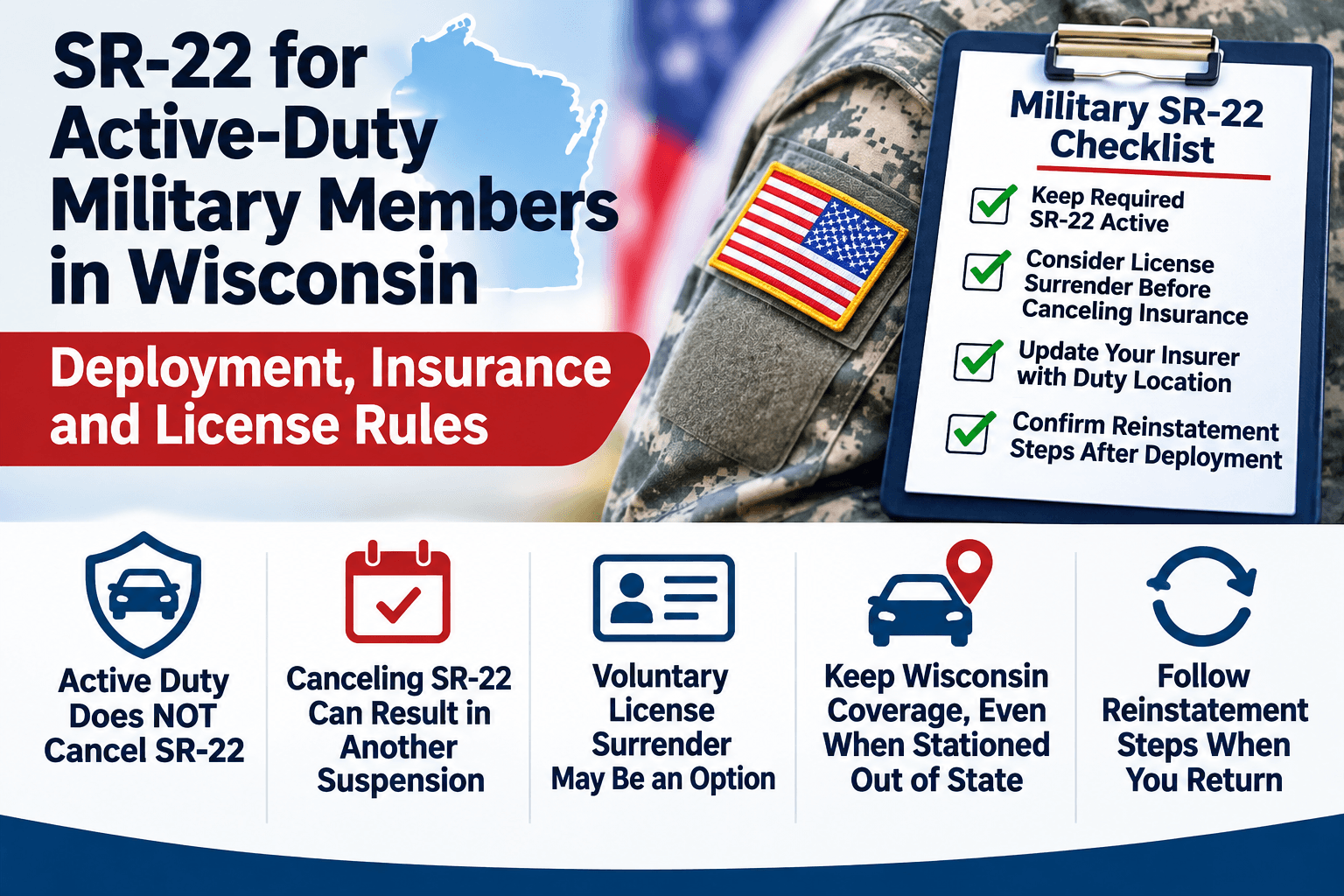
SR-22 for Active-Duty Military Members in Wisconsin: Deployment, Insurance and License Rules
Quick answer: Active-duty military service does not automatically pause, cancel, or erase a Wisconsin SR-22 requirement. If Wisconsin requires you to maintain proof of financial responsibility, the filing generally needs to remain active even while you are stationed outside Wisconsin. If your insurance is canceled while you are on active duty, WisDOT can suspend your driving privilege again.
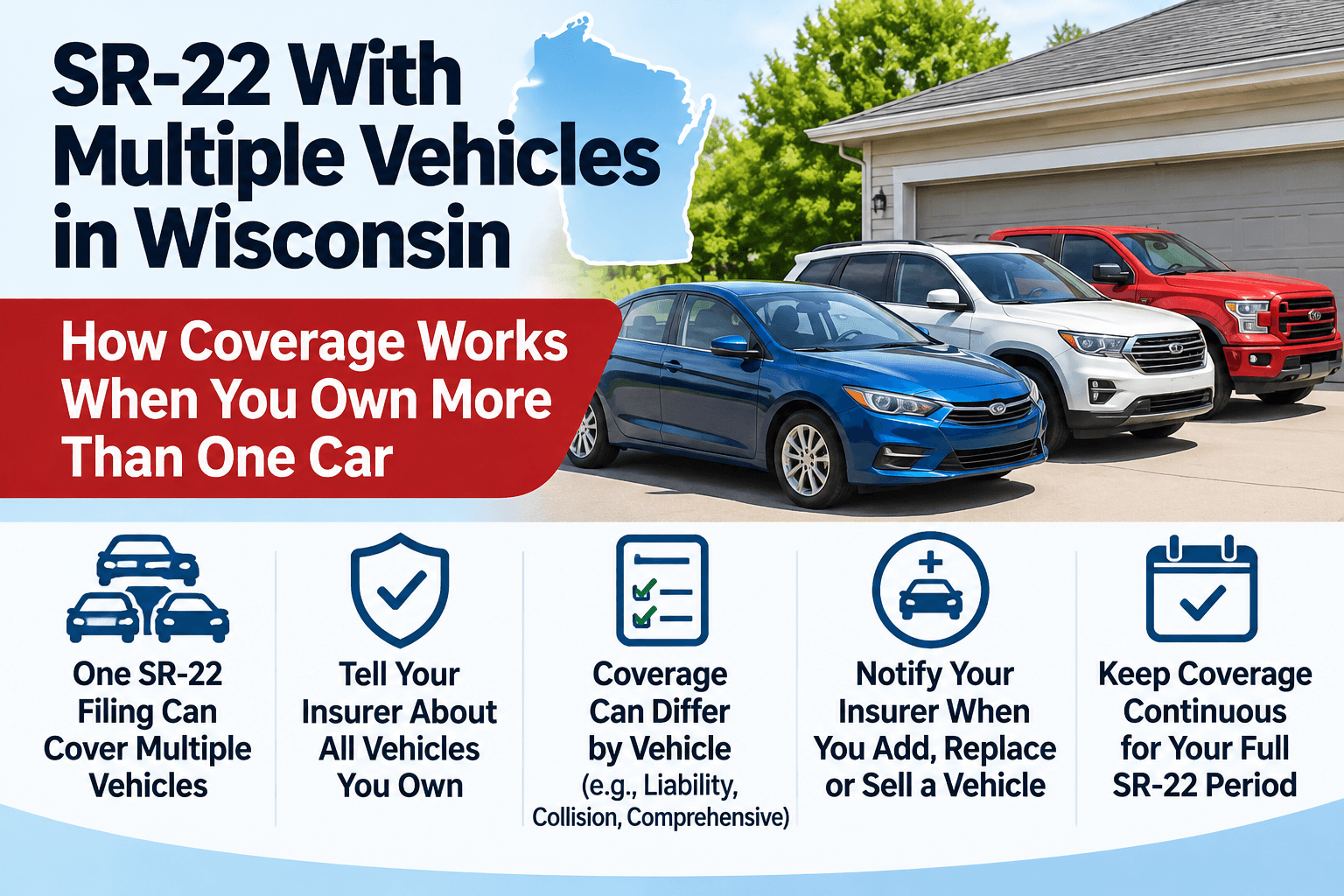
SR-22 With Multiple Vehicles in Wisconsin: How Coverage Works When You Own More Than One Car
Quick answer: If you own more than one vehicle and Wisconsin requires an SR-22, you generally do not obtain a completely separate SR-22 certificate for every car. However, your insurance policy and SR-22 filing must accurately reflect your ownership and driving situation. WisDOT requires the certificate to indicate qualifying owner/operator coverage or coverage for all owned and non-owned vehicles.
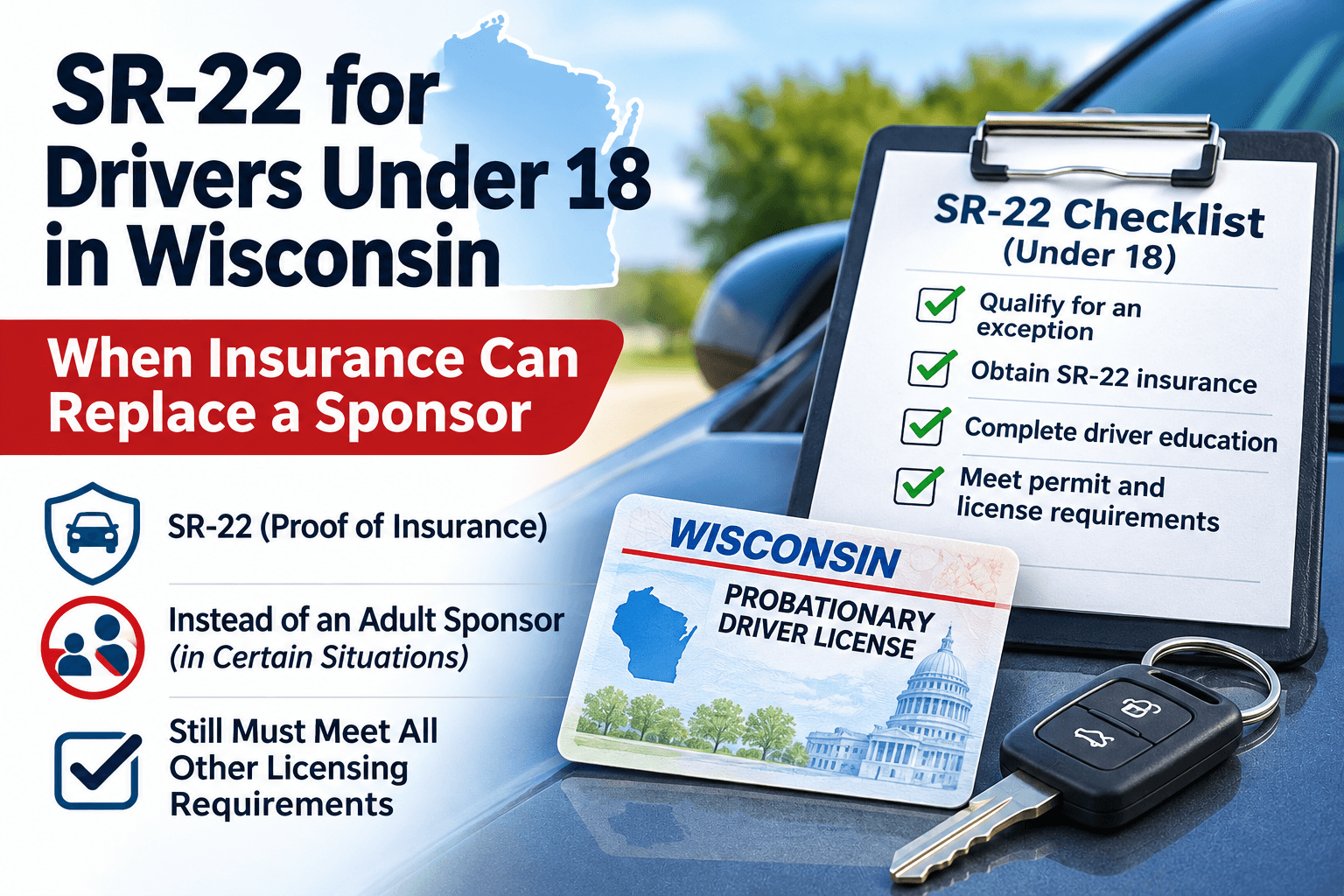
SR-22 for Drivers Under 18 in Wisconsin: When Insurance Can Replace a Sponsor
Quick answer: Most Wisconsin drivers under age 18 need an adult sponsor for an instruction permit or probationary license. However, certain minors who meet specific Wisconsin eligibility rules may file proof of insurance, usually through an SR-22 certificate, instead of having an adult sponsor.
Can You Drive a Company Car With an SR-22 in Wisconsin?
Quick answer: You may be able to drive an employer-owned vehicle while you have an SR-22 requirement in Wisconsin, but the company vehicle’s insurance does not automatically replace your personal SR-22 obligation. You also need valid driving privileges, permission from your employer, and insurance that properly covers your use of the company vehicle.
SR-22 After a Hit-and-Run in Wisconsin: What Happens to Your License and Insurance?
Quick answer: A hit-and-run conviction in Wisconsin can create serious driver’s license and insurance consequences. Depending on the circumstances, you may face a suspension or revocation, higher insurance costs, and an SR-22 requirement when you become eligible to reinstate your driving privileges. An SR-22 does not erase the violation or restore your license by itself—it only proves that qualifying liability insurance is active.