
What is an SR-22?
An SR-22 is a certificate of financial responsibility required by the states for drivers who have had their licenses suspended or revoked. It proves that you carry liability insurance required by the Department of Motor Vehicles (DMV).


Helping Drivers Navigate SR-22 Insurance Requirements
Many drivers are required to obtain an SR-22 certificate of financial responsibility after serious traffic violations or license suspensions. The SR-22 filing verifies that a driver maintains the minimum liability insurance coverage required by state law.
Our team helps drivers understand their SR-22 requirements and ensures the filing is submitted correctly so they can begin restoring their driving privileges.
Drivers commonly need SR-22 filings after situations such as:
• DUI or OWI convictions
• Driving without insurance
• Multiple traffic violations
• License suspension or revocation
• Court-ordered insurance requirements
Our team specializes in state-specific SR-22 filings, ensuring you meet all legal requirements. Our job is to make the process simple.
Our Experience with SR-22 Insurance Filings
SR-22 filings must meet strict state insurance requirements and must be submitted correctly to the appropriate motor vehicle agency. Our team focuses on helping drivers obtain compliant SR-22 insurance policies and ensuring the filing is handled accurately.
We work with licensed insurance providers that offer policies designed to meet SR-22 filing requirements. If you do not own a vehicle, you may still qualify for non owner SR-22 insurance in Wisconsin.
Once a policy is activated, the SR-22 certificate is electronically submitted to the appropriate state agency to confirm that the driver maintains the required liability insurance coverage.
Our goal is to simplify the SR-22 process so drivers understand:
• why the SR-22 filing is required
• how long the filing must remain active
• how to maintain continuous insurance coverage
• how the filing helps restore driving privileges
Clear guidance and accurate filings help drivers avoid delays and remain compliant throughout the SR-22 requirement period.
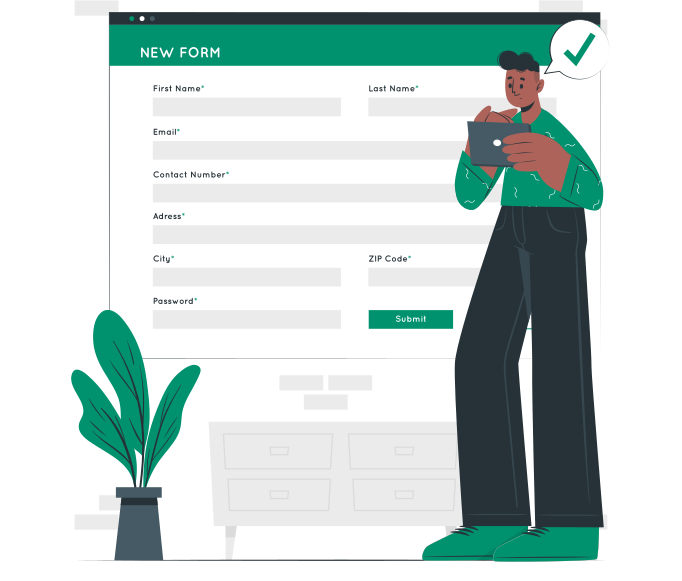
How to get an SR-22?
01

02

03

04
Why Drivers Trust Our SR-22 Filing Service
Drivers required to obtain SR-22 insurance often need clear guidance to navigate the process and avoid mistakes that could delay license reinstatement. Our approach focuses on providing accurate filings, compliant insurance coverage, and clear information about SR-22 requirements.
Drivers rely on our SR-22 filing assistance because we focus on:
✔ Accurate SR-22 submissions to the appropriate state agency
✔ Insurance policies that meet state liability requirements
✔ Clear explanation of SR-22 compliance obligations
✔ Guidance for maintaining continuous coverage
By helping drivers understand the SR-22 process and maintaining proper insurance coverage, we make it easier to complete the required filing period and restore normal driving privileges.
Our Commitment to Accurate SR-22 Compliance
SR-22 filings are tied to state insurance regulations and must remain active for the full compliance period established by the state. Because a lapse in coverage can result in license suspension or restarting the filing period, maintaining continuous insurance coverage is essential.
Our focus is on helping drivers obtain SR-22 insurance policies that meet state requirements and ensuring the filing process is completed correctly from the start.
By providing clear guidance and compliant filings, we help drivers avoid unnecessary complications while working to restore their driving privileges.
Understanding the SR-22 Filing Process
Obtaining an SR-22 filing may seem complicated, but the process is straightforward when handled correctly. The key requirement is maintaining an active insurance policy that meets the state’s minimum liability coverage.
Once an SR-22 insurance policy is activated, the insurance provider submits the SR-22 certificate electronically to verify that the driver maintains the required coverage. The filing remains attached to the policy for the duration of the state-mandated compliance period.
Drivers must maintain continuous insurance coverage during this time to avoid additional penalties or restarting the SR-22 filing requirement.
Meet Our President
H. David Brown
President, B&J Insurance Agency Inc.
H. David Brown is President of B&J Insurance Agency Inc., with 44 years of experience providing trusted, personalized insurance solutions. With deep expertise in the insurance industry, David is committed to helping individuals, families, and businesses find the right coverage to protect what matters most.
Known for his integrity, personalized service, and strong client relationships, David has helped lead B&J Insurance Agency with a focus on professional insurance guidance, customer service, and community commitment. His decades of experience and dedication have made him a trusted resource for clients seeking knowledgeable, dependable insurance assistance.
- State insurance licences
- WisconsinLic. 3000855057
- IllinoisLic. 3000122411
- IndianaLic. 3702513
- MissouriLic. 3004128801
- TexasLic. 2704961